An SMS from 8171 can be short, but its meaning matters a lot. Many people receive a reply and are not sure whether it means they are eligible, still under check, or not eligible at all. This guide explains each type of reply in plain language, so you can act correctly and avoid paying an agent for a simple answer.
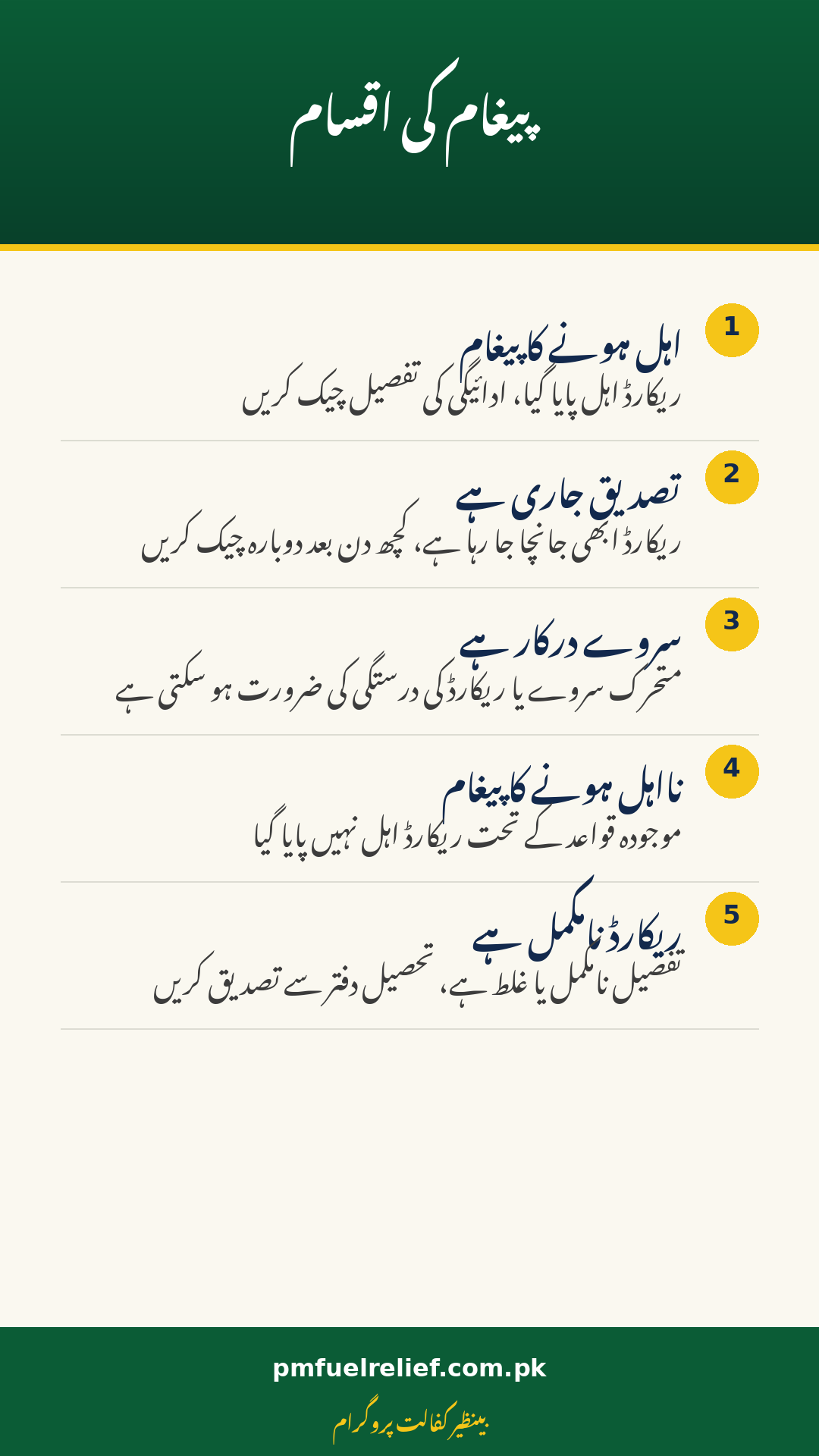
| Reply type | Plain meaning |
|---|---|
| Eligible | You qualify in principle, subject to payment timing and collection route |
| Under verification | Your record is still being checked, so the result is not final |
| Not eligible | Your record does not meet the programme rules as they stand |
| Survey required | A new or updated survey may be needed before a decision can be made |
| No record found | The number or record could not be matched, so check it and try again |
How to Check Your Status by SMS
The SMS route is simple, but a small mistake can give a confusing result.
- Send your CNIC number: Type your 13-digit CNIC number, without dashes, and send it by SMS to 8171.
- Keep the message: Save the reply message, because it may be needed later at a payment point or office.
- Check the SIM ownership: Use a SIM registered in your own name, so the reply goes to the right person.
- No fee for a reply: A genuine 8171 reply does not require payment to any agent or shopkeeper.
How to Check on the Official Portal
If you have internet access, the portal gives the same result with more detail.
- Use the official portal only: Open the official BISP portal, not a copied site or a link sent by a stranger.
- Enter your CNIC carefully: Type the same 13-digit number, without dashes, and check it before you submit.
- Read the full result: Do not stop at the first word; read the whole message, including any instruction about payment or survey.
- Save a screenshot: If you can, save a screenshot of the result, so you have a record if you need help later.
What an Eligible Reply Means
An eligible reply is good news, but it does not always mean cash is ready today.
- Eligible is not cash in hand: It means your record qualifies in principle, but payment depends on timing, verification and the collection route.
- Follow the instructions: The message or portal result may say when and how payment can be collected, and those instructions should be followed exactly.
- Keep your CNIC ready: A valid CNIC and, where asked, the original record are normally needed at the collection point.
- Confirm before travelling: If the payment timing is unclear, confirm it before travelling a long distance, especially if you rely on public transport.
What Under Verification or Survey Means
This reply causes the most worry, but it is not a rejection.
- Do not treat it as a rejection: Verification or survey status is not a final refusal; it means your record still needs to be checked or updated.
- Wait for the next check: In many cases, the status changes after data is updated or a survey is completed, so checking again later can be useful.
- Correct your record if asked: If the portal or office asks for updated information, provide it through the official channel, not through an agent.
- Avoid paying anyone: No one can lawfully speed up verification for a fee, so a demand for money is a warning sign.
What a Not Eligible Reply Means
A not eligible reply should be read for its reason, not treated as the end of the matter.
- Read the reason carefully: The reason may point to income, household data, survey status or another programme rule, and each reason has a different next step.
- Do not resend repeatedly: Sending the same CNIC many times will not change the result and may only create confusion.
- Update your record if it changed: If your household circumstances have changed, update your record through the official route and then check again after the update is recorded.
- Ask at the official office if unsure: If the reason is unclear, ask at the official BISP office or helpline, and keep any reference number you are given.
Record Problems, Wrong Numbers and Scam Messages
Many problems are not about eligibility at all, but about the record, the SIM or a fake message.
- Wrong CNIC number: If you typed the wrong number, send the correct CNIC again, but only to 8171, and do not share it in groups or with strangers.
- SIM not in your name: If the SIM is registered to someone else, messages may go to the wrong person, so use a SIM registered in your own name for official checks.
- No reply received: If no reply arrives, check the signal, SIM balance and whether the number was typed correctly, then try once more later.
- Scam message received: If a message asks for a fee, OTP or bank details, do not reply, do not share details, and report it through the official channel.
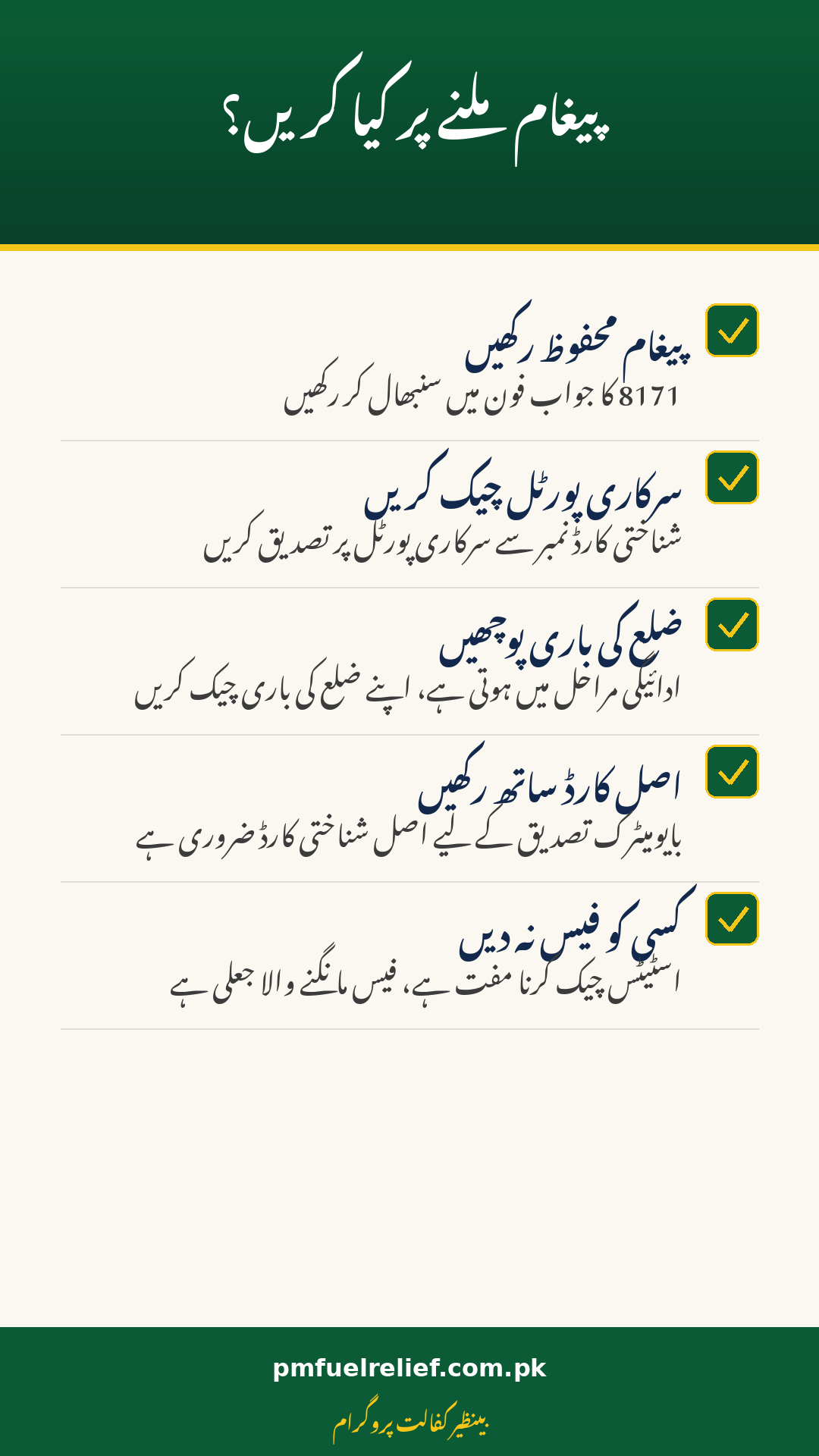
| Before you act | Do this |
|---|---|
| Check the sender | Genuine replies come from 8171, not a personal number |
| Check your CNIC | 13 digits, no dashes, typed correctly |
| Check the wording | Read the full reply, not just the first word |
| Check the next step | Follow the instruction in the reply or portal result |
| Keep proof | Save the message or a screenshot for later |
Conclusion
An 8171 reply is only useful when it is read correctly. Eligible means you qualify in principle, under verification means a check is still in progress, and not eligible means you should read the reason and act through the official route. Use 8171 or the official portal, keep your CNIC ready, and never pay anyone to change a reply.
FAQs
How do I check my BISP status?
Send your CNIC number by SMS to 8171, or enter it on the official portal, and read the reply carefully before acting.
Does eligible mean my payment is ready?
Not always. It means your record qualifies in principle, but payment timing and the collection route still need to be confirmed.
What should I do if my reply says under verification?
Wait, check again later, and update your record through the official channel if asked. Do not pay anyone to speed it up.
Can an agent make me eligible for a fee?
No, eligibility follows programme rules, and anyone asking for a fee is trying to cheat you.