Petrol prices in Pakistan no longer wait for a fortnightly announcement. Since 17 July 2026, prices move almost daily — and that is why the pump price you saw last week is rarely the price you see today. Understanding the system behind those moves matters, because it explains both the daily changes and the one thing that does not change: your PM Fuel Relief of Rs 100 per litre within quota.
This article explains how the daily pricing system works, what happened to prices through October 2026, why petrol and diesel move differently, and what daily pricing means for relief users.
How the Daily System Works
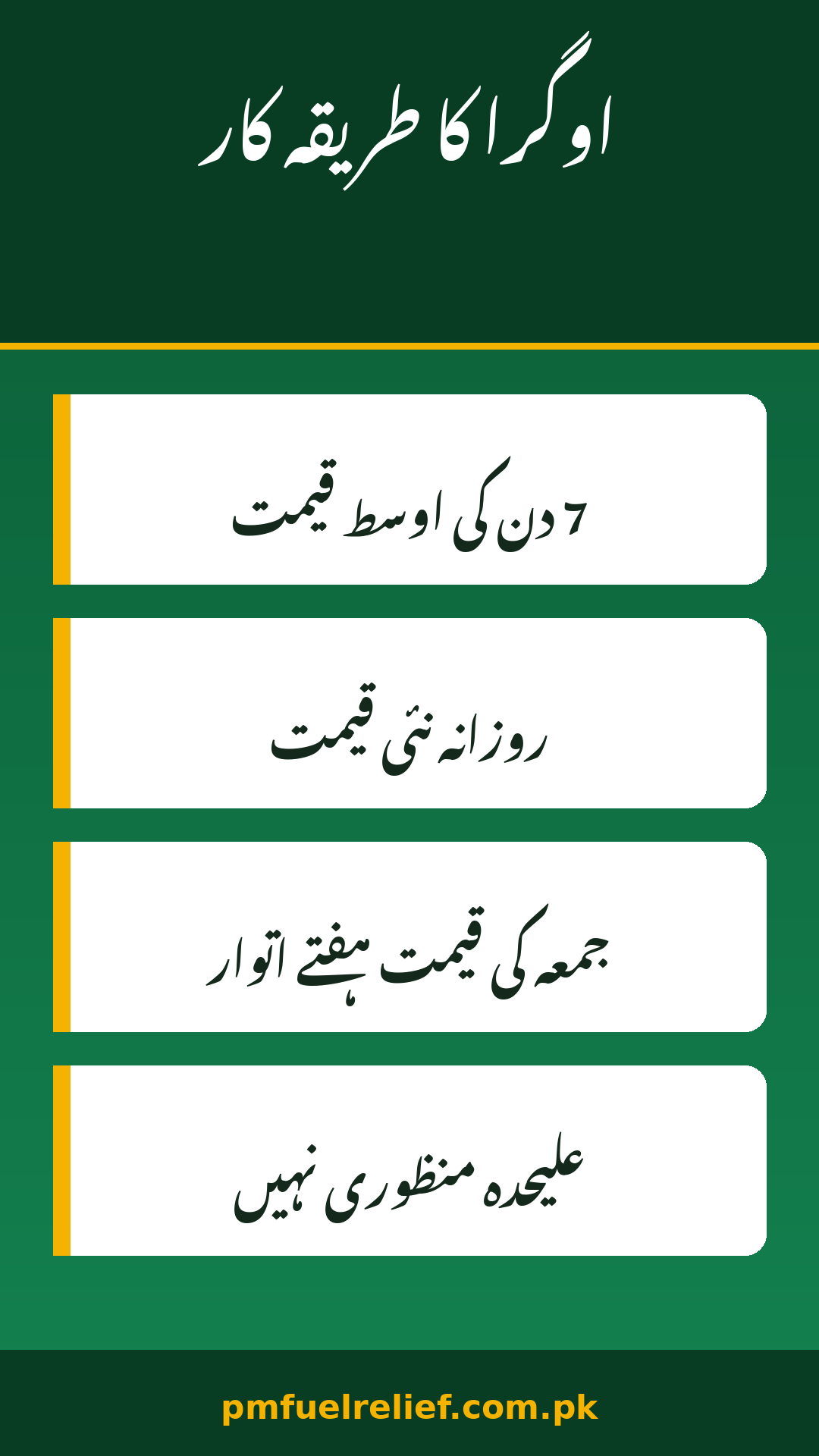
Under the daily pricing system, the Oil and Gas Regulatory Authority (OGRA) calculates daily ex-depot prices from the preceding seven days’ average international rates, known as Platts rates. Each day’s price therefore reflects the international market over the previous week, not a single day’s spike or fall. That seven-day averaging smooths the sharpest daily swings while still letting prices track the market closely.
- Start date: Daily pricing began on 17 July 2026, as reported by Radio Pakistan.
- Who calculates: OGRA calculates the daily ex-depot prices.
- Based on: The preceding 7 days’ average international (Platts) rates.
- Approval: There is no separate Prime Minister approval for each announcement under this system.
- Weekends: Friday prices hold for Saturday and Sunday, as reported by Dunya News on 23 October.
October 2026 in One View
October shows the system in action. Each price below is dated, and none of them is presented as today’s price — they are the dated path through the month.
| Date (Oct 2026) | Petrol | Diesel |
|---|---|---|
| 1 Oct | Rs 387.40 | — |
| 9 Oct | Rs 398.96 | — |
| 20 Oct | Rs 381.14 | Rs 389.27 |
| 23 Oct | Rs 377.71 | — |
| 28 Oct | Rs 376.06 | Rs 398.07 |
Petrol rose from Rs 387.40 on 1 October to Rs 398.96 on 9 October, then fell back through Rs 381.14 on 20 October and Rs 377.71 on 23 October to Rs 376.06 on 28 October. Diesel, meanwhile, rose from Rs 389.27 on 20 October to Rs 398.07 on 28 October — six consecutive rises over that stretch. The two fuels did not move together, and October is a good illustration of why.
Why Diesel and Petrol Move Differently
Petrol and diesel are different fuels with their own international price paths and their own cost builds, so their daily prices can diverge. The latest dated price build, for 28 October, shows the point in general terms: the inland freight equalisation margin (IFEM) was Rs 7.91 for petrol and Rs 4.71 for diesel, while other components also differ between the fuels. No single mechanism is claimed here beyond that general picture — each fuel’s price is calculated from its own preceding seven-day international average and its own build of levies, margins, and freight.
| Component (28 Oct build) | Amount |
|---|---|
| Petroleum levy | Rs 80 per litre |
| Climate support levy | Rs 5 per litre |
| Dealer margin | Rs 9.98 per litre |
| OMC margin | Rs 7.87 per litre |
| IFEM — petrol / diesel | Rs 7.91 / Rs 4.71 |
| Sales tax | Zero |
That build is the latest dated build available for this article, not a permanent price structure. Components can be revised in later notifications, which is another reason the pump price keeps moving.
What Daily Pricing Means for Fuel Relief Users
For relief beneficiaries, daily pricing changes the amount paid at the pump but not the relief itself. Relief is fixed at Rs 100 per litre within quota, regardless of the pump price on the day. The quota arithmetic is therefore unchanged by daily moves: a bike or three-wheeler quota of 20 litres a month carries up to Rs 2,000 of relief, and an 800cc car quota of 30 litres carries up to Rs 3,000, whatever the daily price happens to be.
- Pump price moves: Daily, from the 7-day Platts average.
- Relief stays fixed: Rs 100 per litre within quota, at any pump price.
- Quota math unchanged: 20 litres = up to Rs 2,000; 30 litres = up to Rs 3,000.
- Weekend tip: Friday’s price holds Saturday and Sunday, so a weekend fill-up uses Friday’s rate.
In practical terms, a falling pump price means you pay less out of pocket after relief, and a rising pump price means you pay more — but the Rs 100 relief per litre does not shrink or grow with the market. That stability is the point of fixing relief per litre rather than as a percentage of price.
Contact
| Helpline | Who It Is For |
|---|---|
| 9771 | Public / beneficiaries |
| 9772 | Petrol pump owners |
Conclusion
Daily pricing, in place since 17 July 2026, means OGRA recalculates ex-depot prices from the preceding seven days’ international averages, with Friday prices holding over the weekend and no separate Prime Minister approval per announcement. October 2026 showed both fuels moving on their own paths — petrol falling from its early-month peak to Rs 376.06 by 28 October while diesel climbed to Rs 398.07. Through all of it, fuel relief stayed fixed at Rs 100 per litre within quota. No future price is predicted here: under daily pricing, tomorrow’s price depends on the international averages behind it, and beneficiaries should check the dated price on the day rather than assuming yesterday’s price still holds.
FAQs
When did daily pricing start?
On 17 July 2026, as reported by Radio Pakistan.
How is the daily price calculated?
OGRA calculates daily ex-depot prices from the preceding 7 days’ average international (Platts) rates.
Does the price change on Saturdays and Sundays?
No. Friday prices hold for Saturday and Sunday, as reported by Dunya News on 23 October.
Does my Rs 100 relief change when the pump price changes?
No. Relief is fixed at Rs 100 per litre within quota, regardless of the pump price on the day.
Is a future price predicted in this article?
No. This article gives only dated October prices and the system behind them. Future prices are not predicted.