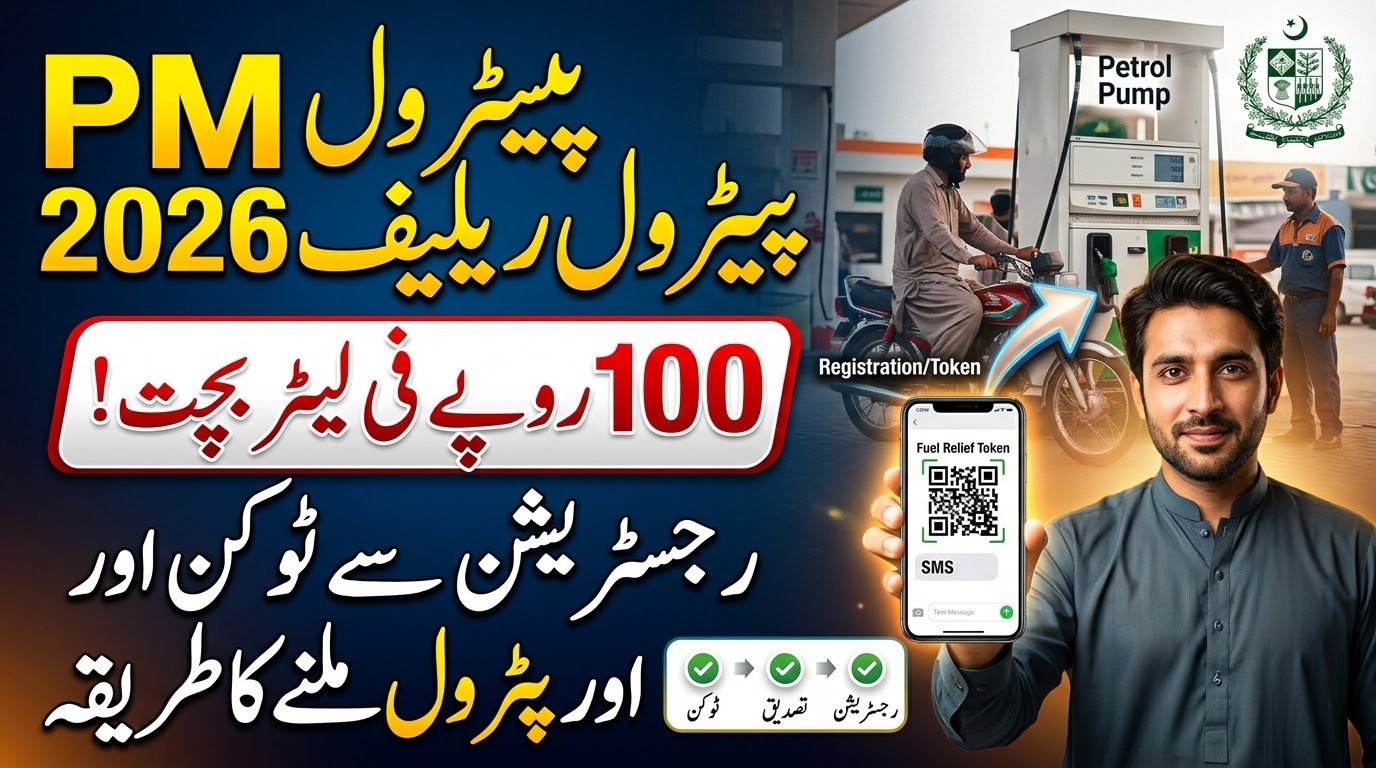
The PM Fuel Relief Scheme 2026 is designed to provide fuel relief to eligible vehicle owners in Pakistan. Instead of giving a general cash payment, the scheme connects eligible consumers with a digital system that allows the approved fuel relief to be used at participating petrol pumps.
For many people, the process may seem confusing at first. They may know about the Rs 100 per litre relief but still want to understand what happens after registration, how the token works, and what they need to do when they reach a petrol pump.
The complete process can be understood in a few simple stages. You provide the required vehicle and identity information, the system checks the details, and eligible users receive the required fuel relief through the scheme’s digital mechanism.
The government has also been working with petrol pump dealers to make the process operational. The Ministry of Energy said in September 2026 that the implementation mechanism had been explained to petroleum dealers and that a reimbursement system was in place for participating pumps.
| Step | What Happens |
|---|---|
| 1. Registration | Vehicle and CNIC details are submitted |
| 2. Verification | Submitted information is checked |
| 3. Approval | Eligible applicants move into the relief system |
| 4. Token | A digital fuel token is generated for use |
| 5. Petrol Pump | The token is used when buying eligible fuel |
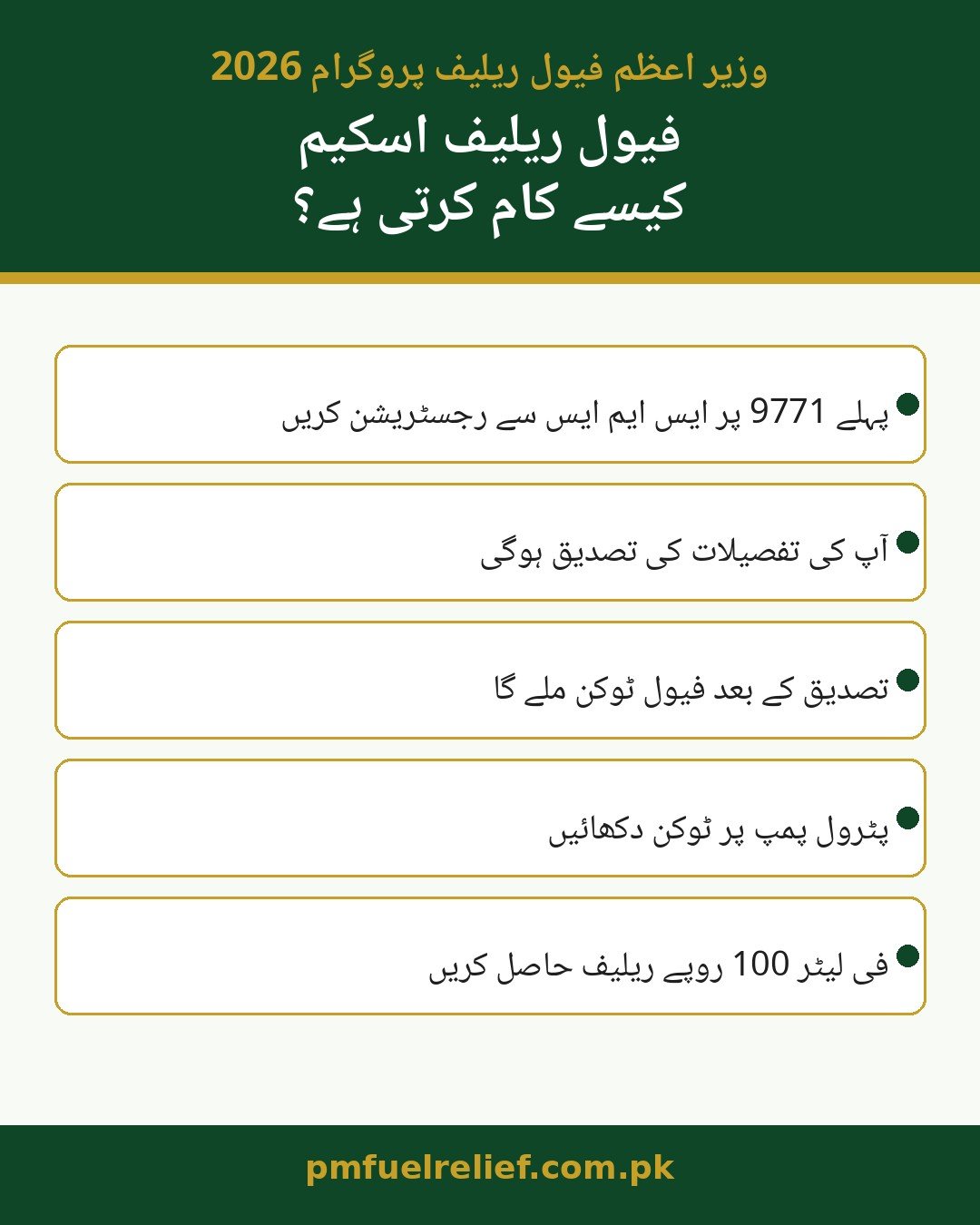
PM Fuel Relief Registration Starts the Process
Registration is the first important step in the PM Fuel Relief Scheme. The applicant needs to provide correct information about the vehicle and the registered owner.
The registration information is important because the scheme is connected with identity and vehicle records. A mistake in the CNIC, vehicle number, province code, or other required information can create problems during verification.
Before submitting registration details, users should carefully check:
- Their CNIC number is entered correctly.
- The vehicle registration number matches official records.
- The province code is correct.
- The vehicle registration date is entered in the required format.
- The SIM being used for the process belongs to the applicant where required.
- The information provided matches the vehicle and ownership records.
The official Petroleum Division website is a useful government source for checking petroleum-related announcements and updates. Ministry of Energy (Petroleum Division)
Fuel Relief Verification and Eligibility Check
After registration, the information has to pass the required checks. This stage is important because the relief is not simply based on sending an SMS or submitting a form.
The system needs to identify whether the applicant and vehicle meet the applicable conditions of the scheme.
For a successful application, the information should be consistent across the required records. If there is a mismatch, the application may require correction or further checking.
Applicants should therefore avoid submitting random information just to complete registration. The correct vehicle and owner details are more important than simply getting a registration message sent.
The verification stage can involve checking details such as:
- CNIC information.
- Vehicle registration information.
- Vehicle category.
- Registration date.
- Province or registration details.
- Other information required by the official system.
This is why keeping the original vehicle documents nearby can be helpful when completing the registration process.
Fuel Token Takes the Relief to the Petrol Pump
Once an eligible consumer moves through the required process, the fuel relief is connected with the digital token system. The token is important because it helps the petrol pump identify the relief transaction.
The token should not be confused with a normal cash payment. It is part of the digital process through which the eligible fuel relief is provided.
When using the token, the customer should follow the instructions given by the official system. The amount of fuel and the applicable limits depend on the vehicle category and scheme rules.
The current implementation also involves petrol pump dealers. In September 2026, the Ministry of Energy said that more than 10,000 petrol pumps were part of the network and that payments had already been made to more than 8,500 pumps as the reimbursement process continued.
This means the petrol pump is an important part of the final stage. The customer receives the benefit at the point where eligible fuel is purchased, while the participating dealer follows the system for processing and reimbursement.
How to Use the Fuel Token at a Petrol Pump
After receiving the required token, the next step is visiting a participating petrol pump. The customer should tell the pump staff that they want to use the PM Fuel Relief benefit.
The process can be understood in a simple way:
- Go to a participating petrol pump.
- Tell the pump worker that you want to use the fuel relief token.
- Provide the required token or information requested by the system.
- Follow the verification instructions at the pump.
- Receive the eligible amount of fuel under the applicable limit.
- Check the transaction before leaving the petrol pump.
The exact digital procedure may depend on the system being used at the participating pump. The government has established a digital system for implementation, while a dedicated control room has also been established to assist petrol pumps with scheme-related issues.
It is also important to understand that the Rs 100 per litre figure should not be treated as a flat cash payment to every applicant. The actual relief depends on the eligible fuel quantity and the applicable vehicle category.
| Vehicle Category | Relief Structure |
|---|---|
| Motorcycle/Bike | Eligible fuel relief under scheme limit |
| Rickshaw/Qingqi | Eligible fuel relief under scheme limit |
| Other 2–3 Wheelers | Eligible fuel relief under scheme limit |
| Cars up to 800cc | Eligible fuel relief under car limit |
| Petrol Pump | Processes eligible relief transaction |
What Happens If There Is a Problem at the Petrol Pump?
Sometimes a customer may reach the petrol pump and find that the token is not being processed. This does not automatically mean that the person has lost the relief.
A problem can occur because of a system issue, incorrect information, a token problem, or a technical issue at the petrol pump.
The best approach is to check the information carefully instead of trying the transaction repeatedly without understanding the problem.
Keep these points in mind:
- Check that the token information is correct.
- Make sure you are using a participating petrol pump.
- Ask the pump staff to check the transaction through the official system.
- Do not share sensitive CNIC or account information with unknown people.
- Use official government channels for complaints or clarification.
- Avoid paying anyone who claims they can create a special fuel token for you.
The Ministry of Energy has stated that petrol pumps can contact a dedicated control room at 9772 for assistance with scheme implementation issues. This number is for petrol pumps and should not be confused with the public registration system.
Conclusion
The PM Fuel Relief Scheme works through a step-by-step process rather than a simple cash payment. The process starts with registration and the submission of vehicle and identity information. After the required verification, eligible users can receive a fuel token connected with the scheme’s digital system.
The token is then used at a participating petrol pump, where the eligible fuel relief is processed. Petrol pump dealers are also connected to the government reimbursement system so that they can provide the relief to eligible consumers.
Understanding this process makes it easier to see how registration, verification, the fuel token, and the petrol pump are connected. Applicants should always use correct information and follow official instructions when using the scheme.
Frequently Asked Questions
1. What is the PM Fuel Relief Scheme?
The PM Fuel Relief Scheme is a government fuel relief program designed to provide eligible consumers with relief on qualifying fuel purchases under the applicable scheme rules.
2. Does the Rs 100 per litre mean everyone receives Rs 100 in cash?
No. The Rs 100 per litre figure refers to the fuel relief rate. The total benefit depends on the eligible fuel quantity and the applicable vehicle category.
3. Where is the fuel token used?
The fuel token is used at a participating petrol pump as part of the digital process for providing the eligible fuel relief.
4. What should I do if the token does not work at the petrol pump?
First check the token and registration information and ask the petrol pump staff to verify the transaction through the official system. If there is a technical issue, the matter may need to be handled through the relevant official support channel.